Tensor Fascia Lab
The Scar Under Your Chin Nobody Thought to Treat
A childhood fall leaves a scar under the chin. Years later, the neck tilts forward, the jaw tightens, headaches appear. The link is almost never made.
Growing up, I knew a lot of kids who broke their chin. A fall off a bicycle, a collision on the playground, a slip on wet tiles. They went to the hospital, got stitched up, came back to school with a bandage. A few weeks later, the bandage came off and life moved on.
The scar stayed. But nobody thought much about it.
Years later, some of those same people started developing things. A forward head posture that no amount of ergonomic advice would fix. A jaw that clicked or ached. Neck tension that lived in a specific band and never fully released. Headaches with no clear cause. Treatments helped for a while, then the pattern returned.
By the time the headaches arrive, or the jaw starts clicking, or someone asks about your posture, the scar is the last thing anyone thinks to ask about.
Why the chin matters more than it looks
The tissue under the chin is not isolated. It sits at the base of the anterior neck, connecting into the deep front line of the fascial system, the same line that runs up through the throat, the jaw, the base of the skull, and down into the thorax and core.
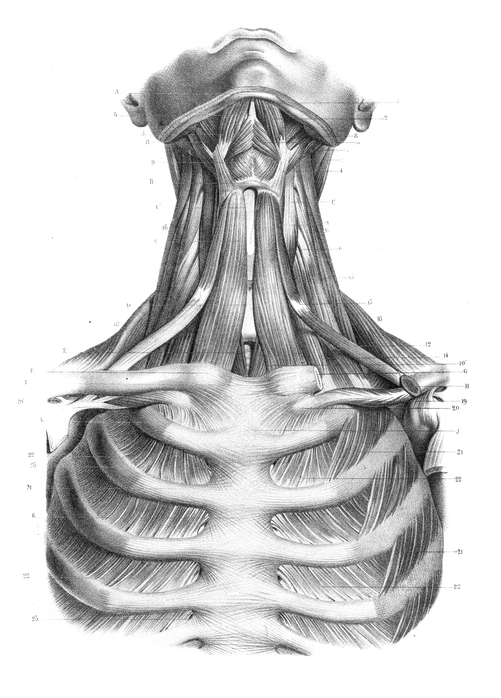
When a scar forms in this area, it rarely integrates cleanly with the surrounding tissue. It can pull. It can restrict. Over time, the body accommodates: shortening the anterior neck, shifting the head forward, altering how the jaw sits and moves. None of this happens dramatically. It happens slowly, over years, in the background.
What ScarWork addresses
ScarWork works directly with the scar tissue, helping it soften and reconnect with the surrounding fascial web. Under the chin, this means working with a relatively small area that has an outsized influence on how the anterior neck holds tension and how the head sits in space.
The results are often local at first: a softening of the tissue, a return of sensation, a sense that something that was held has let go. But because the anterior neck connects into so much of how the head and jaw are organised, the changes often ripple further than the scar itself.
Where Structural Integration comes in
ScarWork addresses the source. Structural Integration addresses what the body built around it.
Years of compensating for a restricted anterior neck leave their own pattern: a forward head, a shortened front body, a jaw that has learned to work around rather than within a balanced structure. Structural Integration assesses how the whole body has organised itself in response, and works systematically to unwind those adaptations and allow the body to return to a more balanced relationship with gravity.
The two approaches together do something that neither does alone: one clears the anchor, the other restores what the anchor was holding back.
Who is it for
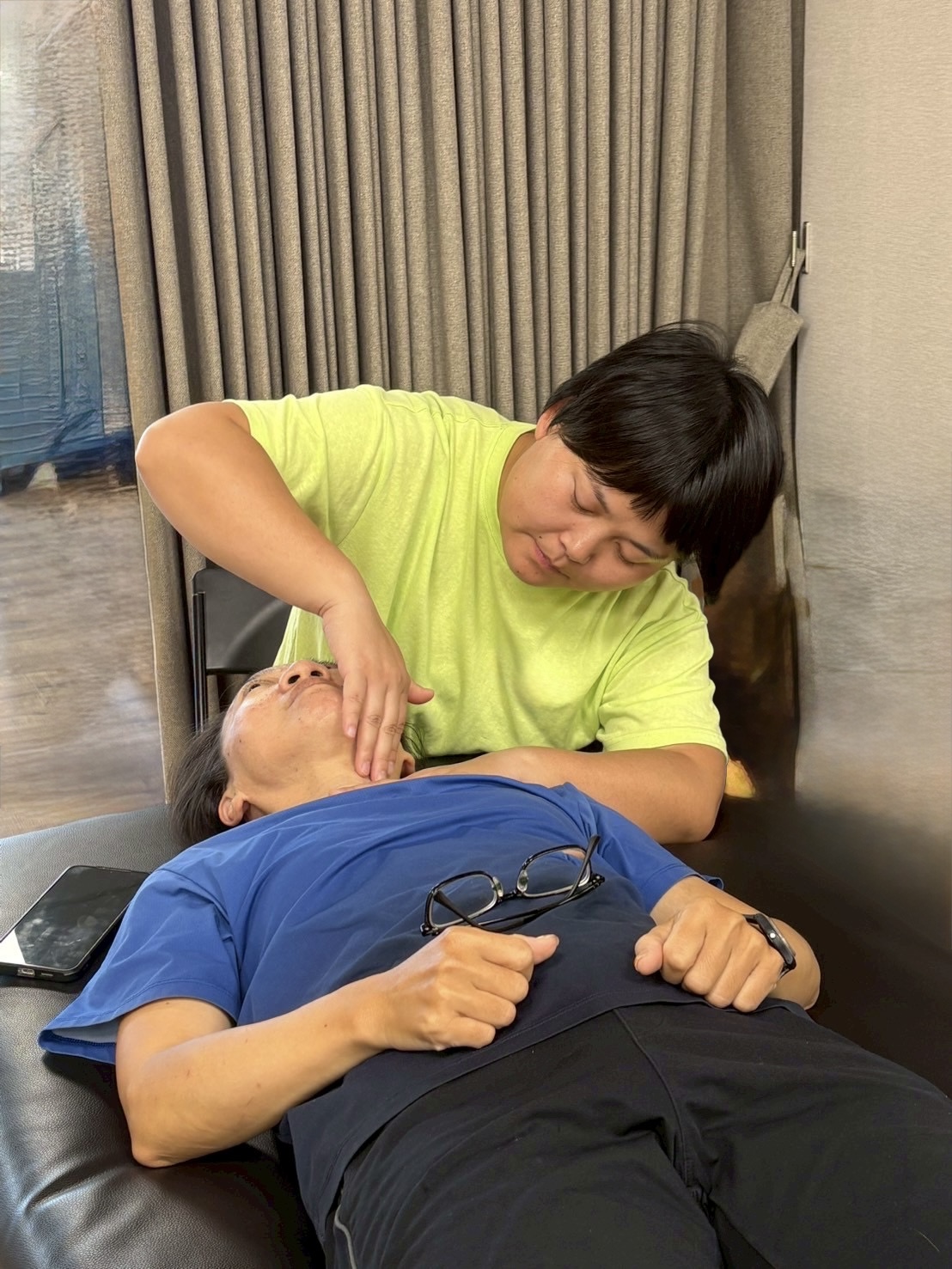
If you broke your chin as a child and have lived with any of the following, it may be worth a conversation:
- Chronic neck tension that doesn't fully resolve
- Forward head posture
- TMJ discomfort or jaw clicking
- Unexplained headaches, particularly at the base of the skull or behind the eyes
- A sense of tightness or restriction in the front of the throat
The scar may not be the only factor. But in many cases, it is the one nobody has looked at.
Get in touch to talk through your history before booking.
--Kiki
Ready to begin?
Book an Appointment