Tensor Fascia Lab
Beyond the Patch: My Journey to Structural Integration
How Kiki Ruan went from tech to Structural Integration — and why she founded Tensor Fascia Lab in Singapore.
Someone asked me recently: "Do you ever regret leaving Cloudflare? Can you really make a living doing this?"
It’s a fair question. My background isn't a straight line. I spent two years in hospitality before spending a decade in tech, eventually working as a Network Security Engineer at Cloudflare.
By most professional metrics, I was right where I was supposed to be. But the reality of those years, especially the transition to full-time remote work during COVID, was a growing sense of physical stagnation. I lived in a state of constant high-alert "buzz," troubleshooting global networks while my own physical health was taking a backseat. My neck was locked, my shoulders were permanently tight, and I was waking up every day feeling like the workday ahead was something to survive rather than enjoy.
Seeking a Systemic Solution
I spent a lot of time trying to fix the symptoms. I cycled through physio, TCM, and osteopathy. While osteopathy helped to an extent, the relief never really stuck. I felt like I was constantly applying "patches" to a system that needed a total redesign.
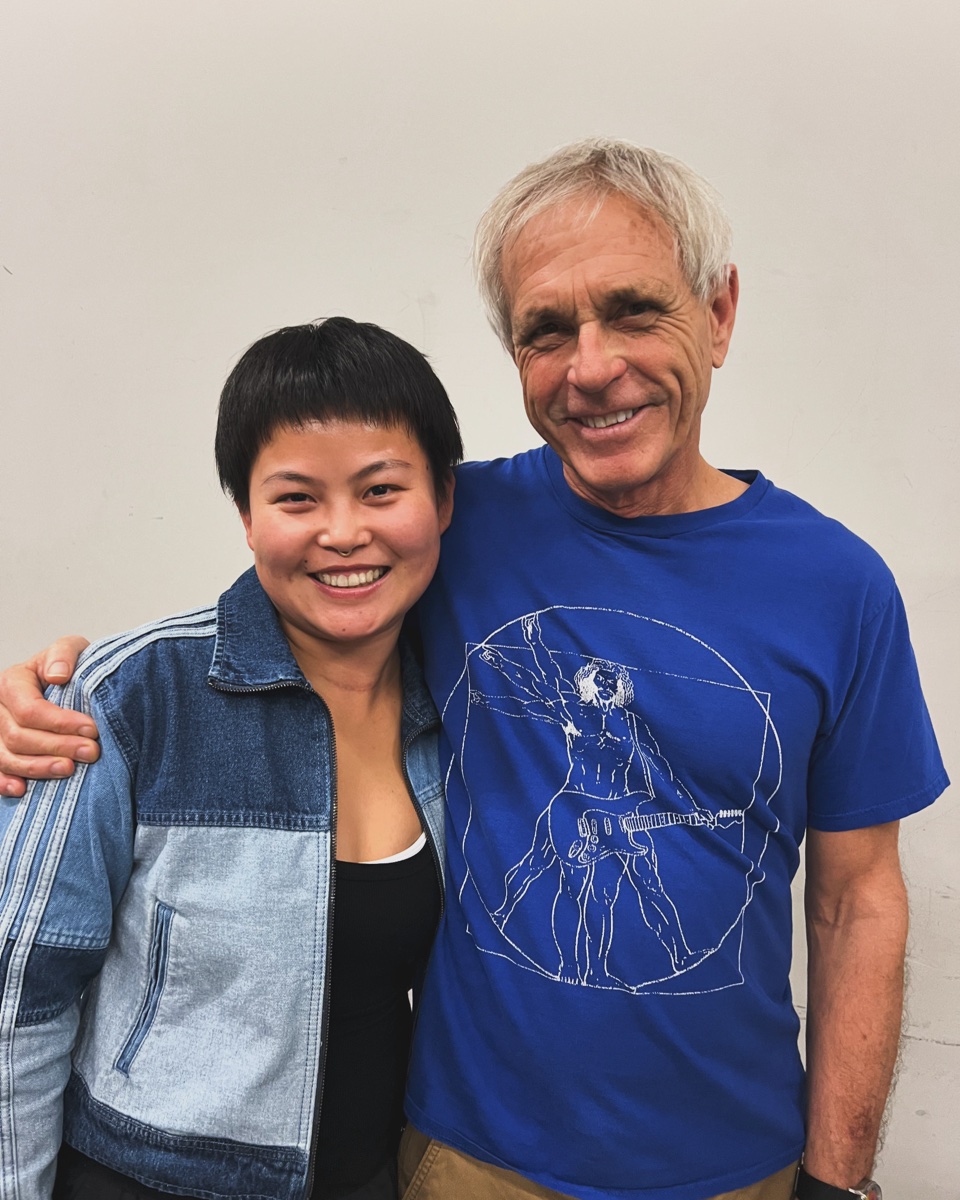
As an engineer, this was frustrating. I didn’t want to just manage the fallout; I wanted to find the root cause. In March 2024, I discovered Anatomy Trains Structural Integration (ATSI) and had the privilege of attending my first course with Tom Myers himself. I remember sitting in that first course half-expecting to be overwhelmed, and instead finding myself laughing, engaged, and actually understanding things I’d only read about. Tom has a way of making the most complex anatomical concepts land cleanly, without losing any of the depth. The class was alive. I left with more clarity than I’d had in years.
It reframed everything. My "neck problem" wasn’t a neck problem at all — it was the end of a chain of tension running through my entire system. For the first time, I had a map.
The Transition: From Personal Interest to Practice
This wasn't a sudden leap. When I started learning Structural Integration (SI), it was initially an investment in knowledge for myself. I wanted to understand the mechanics behind why my body was failing to reset.
Because this work is something you have to receive to fully understand, I spent that first year as both a student and a client. The logic was so compelling that the interest eventually took over. For over a year, I balanced the demands of network security with training, studying whenever I could find a window of time.
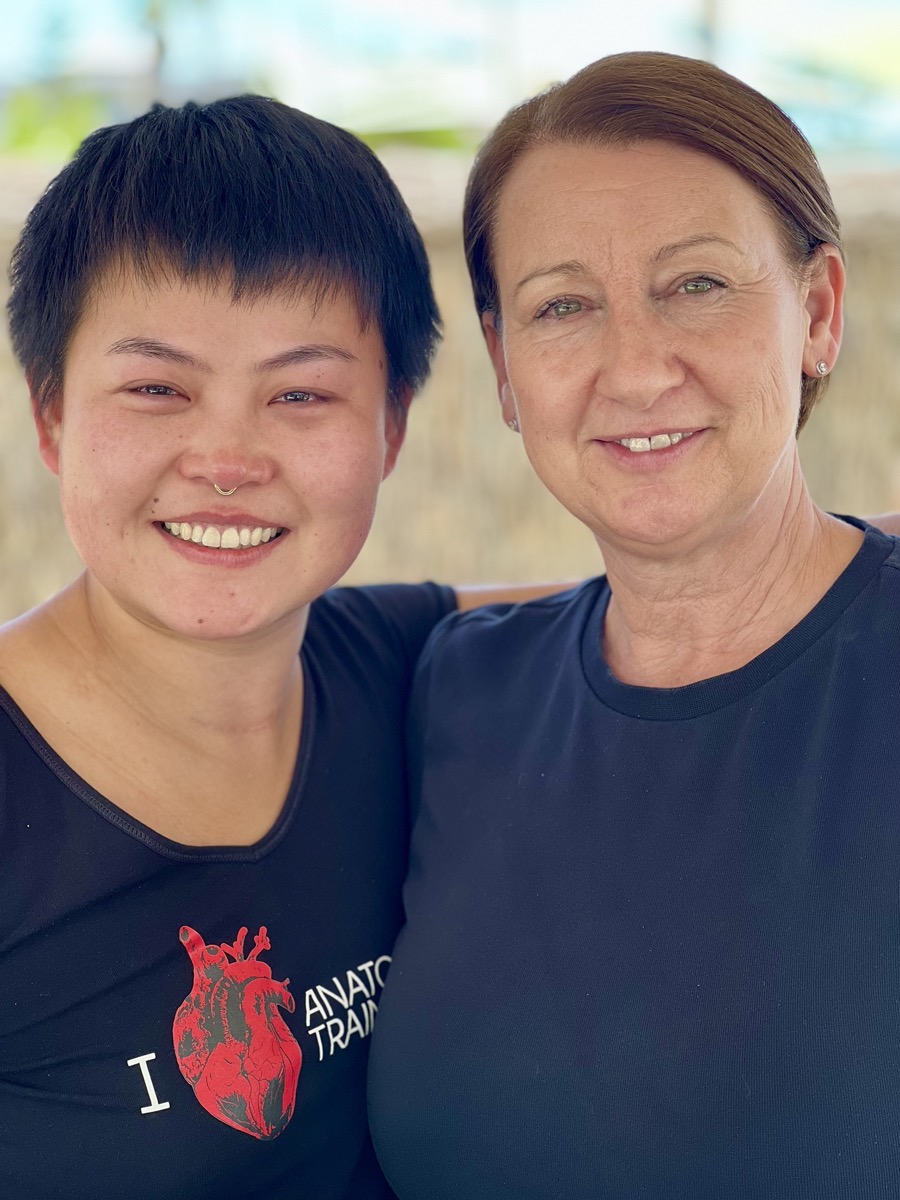
When I finally left my corporate job, I didn't necessarily plan for a long break. It just happened. A year of travel and transition eventually became 16 months. I used that time to move, and I was also deep in the work: practicing, studying, and completing the case studies required for my practitioner certification. During this period, I had the privilege of continuing my training with Julie Hammond — Director of Anatomy Trains Australia and New Zealand, and author of The Pelvic Diaphragm. Training with her was a different kind of education. Her teaching went far beyond SI technique, and that time did something I didn't expect: it pushed me to figure out not just how to work, but who I was becoming as a practitioner.
Around the same time, I completed training in ScarWork — a method developed by Sharon Wheeler. I hadn't planned for it to become a core part of my practice, but it did. The two complement each other remarkably well, and some of the most meaningful sessions I've had with clients have been when I can bring both together.
Why I started Tensor Fascia Lab (TFL)
I started the Lab because I realized my engineering brain wasn't a "past life." It was the exact toolset I needed for this work.
In my previous career, I looked at networks to find the point of failure. At the table, I do the same with the human structure. I saw so many people, especially in tech and high-pressure fields, trapped in the same cycle of "temporary relief" that I had been in. They were looking for a logical way out of chronic tension, but the typical options weren't addressing the whole system.
Tensor Fascia Lab was born from a need to bridge that gap. I wanted to create a space that moves beyond "rubbing where it hurts" and instead applies structural logic to the human body. I’m not just solving digital problems anymore; I’m helping people inhabit their own bodies again, with a sense of ease that actually lasts.
Do I regret it? Not for a second. I’m still solving complex problems. I’m just starting with the human one.
The Lab is officially open. It’s been a long journey from the screen to the table, and I’m exactly where I’m supposed to be.
--Kiki Ruan
Ready to begin?
Book an Appointment